

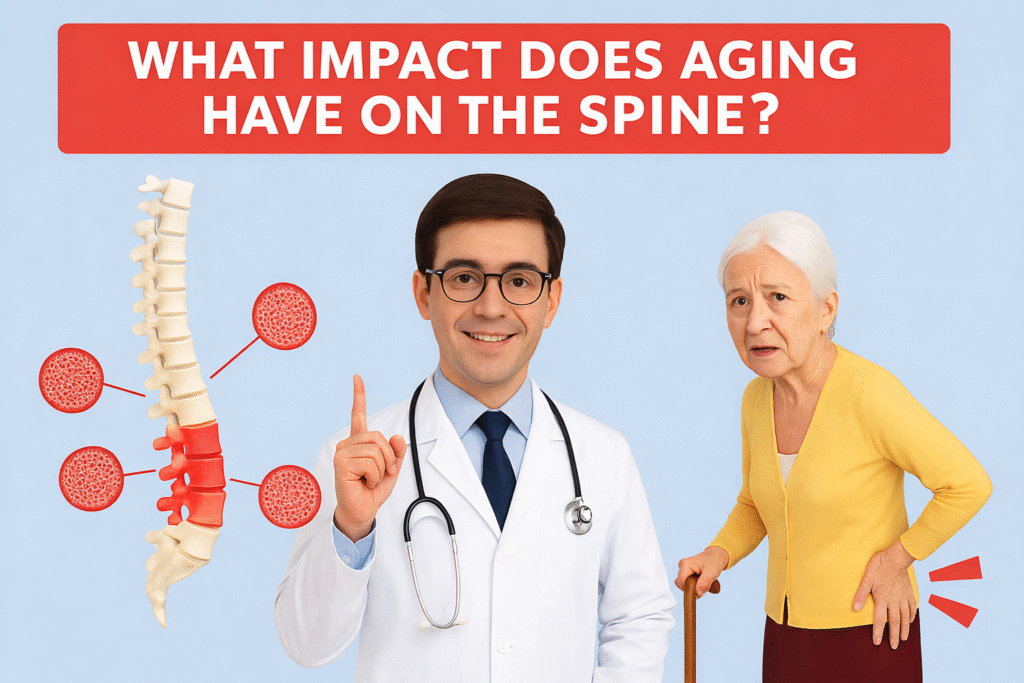
How aging affects the spine: what happens to your back as you get older
Aging is inevitable, but understanding how it impacts your spine can help you take proactive steps to protect your spinal health. The spine is a complex structure of bones, discs, nerves, and muscles — and like every system in the body, it undergoes significant changes with age. Knowing what to expect is the first step toward managing age-related back pain and maintaining quality of life.
The anatomy of an aging spine
The spine consists of 33 vertebrae stacked in a column, separated by intervertebral discs that act as shock absorbers. Surrounding these structures are ligaments, tendons, and muscles that provide stability and flexibility. As we age, each of these components experiences gradual wear — a process collectively referred to as spinal degeneration with age.
This degeneration is not a disease — it is a natural biological process that begins as early as our 30s, though its effects are typically felt more profoundly after 50.
Intervertebral disc degeneration
One of the most significant ways aging affects spine health is through intervertebral disc degeneration. The discs between your vertebrae are made up of a tough outer ring (annulus fibrosus) and a soft, gel-like center (nucleus pulposus). In youth, these discs are well-hydrated and resilient. With age, they lose water content, becoming thinner, less flexible, and more prone to cracking.
When discs degenerate, they lose their height, reducing the space between vertebrae. This narrowing can lead to nerve compression, causing pain, numbness, or tingling that radiates into the arms or legs — a hallmark symptom of age-related back pain. In severe cases, a disc may bulge or herniate, placing direct pressure on nearby nerves.
Spinal stenosis: a narrowing problem
As part of lumbar spine aging, the spinal canal itself can narrow — a condition known as spinal stenosis. This often results from a combination of disc degeneration, thickening of the ligamentum flavum (a ligament lining the spinal canal), and the growth of bone spurs (osteophytes). These changes reduce the space available for the spinal cord and nerve roots.
Spinal stenosis most commonly occurs in the lumbar (lower back) region but can also affect the cervical (neck) spine. Symptoms include leg pain that worsens with walking and improves with rest, a condition called neurogenic claudication — one of the more disabling consequences of the aging spine.
Osteoporosis and vertebral compression fractures
Bone density naturally decreases with age, a condition that can progress to osteoporosis. In the spine, this weakening makes the vertebrae vulnerable to compression fractures — small breaks that cause the vertebra to collapse. These fractures are a major driver of the stooped posture (kyphosis) commonly seen in older adults, especially postmenopausal women.
The osteoporosis-spine connection is particularly important because compression fractures can occur without significant trauma — sometimes simply from a sneeze or bending forward. They are a leading cause of disability and chronic pain in the elderly population.
Cervical spondylosis: aging in the neck
Cervical spondylosis refers to age-related wear of the cartilage and bones in the cervical spine. By age 60, the majority of adults show signs of cervical spondylosis on imaging, though not everyone experiences symptoms. Those who do may report neck stiffness, headaches, or a grinding sensation with movement. In advanced cases, nerve or spinal cord compression can cause weakness, coordination issues, or loss of bladder control — a serious condition called cervical myelopathy.
Protecting your spine as you age
Proactive spine care for seniors can slow degeneration and preserve function. Evidence-based strategies include maintaining a healthy weight to reduce spinal load, engaging in low-impact exercise such as swimming, walking, or yoga to strengthen the core muscles that support the spine, ensuring adequate calcium and vitamin D intake to counter bone loss, and practicing good posture during both sitting and lifting activities.
Regular check-ins with a spine specialist or physiotherapist are especially valuable for older adults with existing risk factors. Early intervention — whether through physical therapy, targeted medications, or minimally invasive procedures — can prevent minor age-related changes from escalating into significant disability.